
Improving Plant Saccharification
Enabling the use of non-edible crop parts as an energy source
Overview
Biorefineries use biomass as a feedstock for chemicals and as an energy source, helping to reduce greenhouse gas emissions. However, the structural resistance of cellulosic biomass to degradation makes saccharification—a prerequisite for chemical production and energy conversion—challenging.
Associate Professor Ito and colleagues at Tohoku University’s Graduate School of Agricultural Science have developed a method to improve saccharification by introducing a gene encoding a cytokinin biosynthesis enzyme into plants of the grass family. Cytokinins suppress plant senescence. The method uses intragenesis; no foreign DNA remains in the plant genome at the final breeding stage. The source therefore states that the method is not subject to restrictions under Japan’s Cartagena Act.
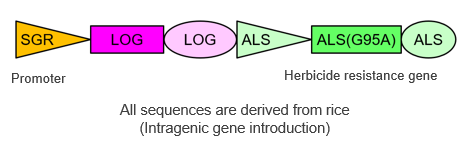
Features・Outstandings
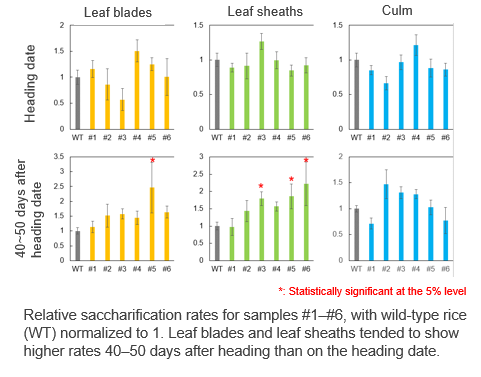
Possible Applications
・Renewable energy
・Treatment and utilization of non-edible crop residues
・Readily degradable feed
IP Data
IP No. : JP 2024-139244
Inventor : ITO Yukihiro, MIURA Kano, NISHIMURA Hotaka
keyword : Rice Straw, Improved Saccharification, Bioethanol, Biorefinery, Intragenesis, Agricultural Residue Utilization, Carbon Neutral